
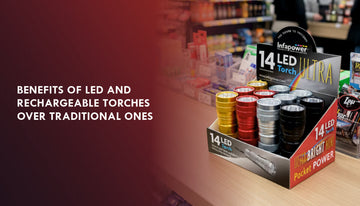
Imagine you’re walking to your car late at night, and you flick on a torch—only to find that its beam is weak, the batteries are dying, and you’re left squinting in the dark. Now imagine the same scenario with a torch that fires up instantly, stays bright for far longer, and you don’t have to keep buying new batteries. That’s precisely the shift happening in 2025 when choosing between traditional torches and newer LED and rechargeable torches.
In this article, we’ll explain why switching to an LED and rechargeable torch makes sense, from cost savings, performance, convenience, to environmental impact.
What we mean by “traditional” vs. “LED and rechargeable” torches
Before diving into benefits, let’s clarify the terms:
-
Traditional torches: These typically use incandescent or halogen bulbs, rely on disposable batteries (AA, AAA, D-cells), and don’t always include built-in rechargeability. They were once the standard.
- LED and rechargeable torches: Here, the light source is a Light Emitting Diode (LED), and the power source is rechargeable via a built-in lithium-ion battery, USB-C, or similar. The design is modern, and many models incorporate multiple brightness modes, durable materials, and longer battery life.
Superior energy efficiency and longer run-time
One of the clearest advantages of an LED and rechargeable torch over traditional ones is energy efficiency. LED technology uses far less power to generate the same or greater brightness compared with incandescent bulbs. For example, LEDs don’t rely on a glowing filament that wastes energy as heat.
Because of this:
-
A torch with an LED will run much longer on the same battery capacity than a traditional torch with an incandescent bulb. That means fewer battery changes or recharges.
-
If the unit is rechargeable, you eliminate the recurring cost (and inconvenience) of buying fresh disposable batteries.
-
In the medium to long term, this translates into lower total cost of ownership—and less hassle.
For users in 2025 who rely on a torch for emergency kits, outdoor use, or professional tasks, that extra run-time can be the difference between a functional tool and one that fails when you most need it.
Example: Suppose a traditional torch using D-cell batteries lasts 3 hours at full brightness before replacement. A comparable LED rechargeable torch might deliver 8-10 hours (or more) under the same or better brightness. Over many uses and battery replacements, the cost and effort savings become significant.
Marketing point for Infapower: Emphasise run-time and battery efficiency. For example: “Get twice (or more) the run-time with the same size torch—thanks to LED and rechargeable design.”
Improved durability and reliability
Durability matters. Traditional torches often incorporate fragile incandescent bulbs, glass components, and battery compartments prone to corrosion or failure. LED and rechargeable torches bring several key improvements:
-
No fragile filament: LEDs don’t contain the thin, brittle filament found in older bulbs. That means they’re less prone to breakage from drops or vibration.
-
Better battery technology: Rechargeable batteries (especially lithium-ion) are built for many cycles and often include protection circuits. Meanwhile, traditional batteries may leak, degrade, or require frequent replacement.
-
More robust construction: Many modern torches are built to withstand impact, water, dust, and rough handling—features that outdated models often lack.
-
Consistent performance: LED brightness tends to drop less over time compared with the burning out or dimming of incandescent bulbs.
A security guard carrying an older torch may find that the bulb fails when needed. With a modern Infapower LED rechargeable torch, the guard can count on consistent brightness through dozens of uses, minimal maintenance, and fewer failures.
Implication: From a brand and user-experience perspective, reliability builds trust. Highlighting this benefit helps position your product not just as “better” but as “dependable”.
Brightness, light quality, and versatility
Brightness isn’t just about “more lumens” (though that matters). It’s also about how well the beam is focused, how the torch performs in different use cases, and how the light quality supports the task. Here’s how LED + rechargeable torches shine (literally) over traditional ones:
-
Higher lumens per watt: LED technology allows more light output for each unit of energy. According to industry commentary, “LED flashlights produce the same amount of brightness while using a fraction of the power.”
-
Directionality and beam control: LEDs allow better control over beam focus, spread, hotspots, and throw. That means users can get long-range illumination or a wide floodlight, depending on design.
-
Multiple modes: Many modern torches support adjustable brightness, strobe, SOS, or red-light modes; older ones often don’t. This versatility matters in real-world use: e.g., camping, emergencies, and maintenance work.
-
Better quality light: LEDs can provide more consistent colour temperature, less flicker, instant-on brightness (no warm-up delay), and less glare or wasted light. For example: “Instant-On Ability: Unlike incandescent lamps that require a little time to warm up, the LEDs achieve full brightness instantly.”
Example: For a home maintenance task in a dim attic, the user chooses an Infapower LED rechargeable torch with a flood mode and medium brightness. The beam covers the attic floor evenly without hot spots or shadows. A traditional torch might have a narrow beam, harsh shadows, or flicker.
Takeaway for marketing: Emphasise “crisp light”, “multipurpose modes”, “beam you control”. This helps the message resonate with users beyond simply “bright”.
Rechargeability, sustainability, and cost-effectiveness
Moving to a rechargeable torch is not only a convenience win—it’s also a sustainability and cost-savings win. Consider these points:
-
Reduced disposable battery waste: Traditional torches often rely on single-use batteries, which add to waste, environmental footprint, and ongoing cost. Rechargeable torches avoid much of that.
-
Lower long-term cost per use: Once you’ve purchased the torch, you’ll spend less on batteries. Over the life of the torch, the cost per hour of use drops significantly.
-
Support for current charging infrastructure: In 2025, most users have USB or USB-C chargers. A torch with a built-in rechargeable battery means one charger for everything rather than multiple batteries.
-
Future-proofing: As battery and charging tech improve (faster charging, better battery chemistry, swappable modules), a rechargeable torch will benefit from upgrades rather than being stuck in the past.
Example: A household uses a traditional torch during power cuts and buys 4 sets of AA batteries every 6 months. Over 2 years, that is a significant cost. Switching to an Infapower LED rechargeable torch eliminates that recurring cost and fits in with other USB-rechargeable devices in the home.
Practical use cases where modern torches outperform the old
It’s one thing to list benefits; it’s another to tie them to real-world situations. Let’s look at how LED and rechargeable torches outperform traditional ones in key scenarios:
-
Emergency kits/power outages: During a blackout or natural disaster, you want a torch that works reliably, doesn’t fail due to dead batteries, and is easy to recharge if you have power. With a rechargeable LED torch, you’re better equipped.
-
Outdoor activities (camping, hiking, fishing): You need compact, lightweight, bright, dual-mode torches. Traditional ones might be bulky, heavy with spare batteries, and less bright. LED/rechargeable models shine here.
-
Professional/industrial use (security, maintenance, inspections): For workers who use torches daily, reliability is critical. Drop resistance, steady output, long battery life, and multiple modes matter. A high-quality LED rechargeable torch better meets these demands than a basic traditional model.
-
Home use and DIY tasks: For simple everyday tasks—checking the fuse box, looking under furniture, doing late-night repairs—a modern torch gives better light and is always ready. Traditional torches may suffer from battery drain, weaker light, and inconvenience.
Example: A maintenance engineer uses two torches during a night shift: a work-grade Infapower LED rechargeable torch with high output and strobe mode (for signalling), and a backup USB-C rechargeable compact model. Using old disposable-battery torches would require carrying spare batteries, replacing them mid-shift, and risking failure.
Considerations when choosing an LED and rechargeable torch
While there are strong benefits to modern torches, it’s important to choose wisely. Here are key factors to evaluate—especially if you’re offering these at Infapower or guiding your customers:
-
Brightness (lumens) and beam design: Higher lumens may sound good, but you also need the right beam pattern (throw vs flood) and appropriate brightness modes. Don't just chase the “big number”.
-
Battery capacity and recharge method: Check for a built-in rechargeable battery (lithium-ion) or a removable/power-bank compatible battery. USB-C is preferred now. Also, check how many hours of runtime and how many recharge cycles.
-
Durability and build quality: Good torches will have impact resistance, waterproofing (IP ratings), and quality materials (e.g., aircraft-grade aluminium).
-
Multiple lighting modes and controls: Low/medium/high, strobe, SOS, red-light mode. These increase usability across tasks.
-
Portability and size: Balance between size and performance; lightweight for carry, but big enough to hold a good battery and output.
-
Brand support, warranty, and service: A well-supported torch ensures longevity and user confidence.
-
Cost vs value: While modern torches cost more upfront than basic traditional ones, the cost savings, performance, and value over time usually justify it.
-
User-specific needs: For everyday home use, you may not need ultra-high output; for industrial/outdoor use, you will. Tailor accordingly.
Conclusion
In summary, the benefits of LED and rechargeable torches over traditional ones are clear and compelling. Users today demand more from their portable lighting: longer run-times, stronger beams, fewer batteries, greater durability, and usability in a range of situations. Modern LED‐and‐rechargeable models deliver on all those fronts.
For Infapower, the opportunity is to showcase these benefits, help customers make the right choice, and reinforce the brand as both practical and forward-looking. Whether someone needs a torch for home use, outdoor adventure, or professional tasks, the switch to LED + rechargeable is well justified in 2025.
Explore the full range of Infapower LED rechargeable torches today and choose the model that suits your needs—and makes your lighting smarter, safer, and more reliable.